
Many retail investors do the same thing.
They hear a company is “profitable”… and they think that is enough.
But is it really?
Because of that, they buy with confidence — then get shocked later when debt rises, cash gets tight, or profit suddenly looks weaker than expected.
This is important: financial statements are not written to confuse you. They are simply written in a language many beginners have never learned yet.
And once you learn the basics, the numbers start to look very different.
Not as noise. Not as mystery. But rather as a story about how the business is really doing.
In this Part 2, we will read that story step by step using two real public companies with 2025 year-end reports: Unilever in Europe and Samsung Electronics in Asia. Unilever’s Annual Report and Accounts 2025 was published on 12 March 2026, while Samsung Electronics’ 2025 audited financial statements were published on 12 February 2026.
So let us begin with the real question.
When you open a financial report, what should you look at first?
Why Beginners Get Lost When Reading Financial Statements
The problem is not that the reports are impossible. The problem is that most people start in the wrong place.
They jump to a headline number. Revenue. Net profit. EPS. Maybe one ratio from social media. Then they stop.
But a financial statement is not a single number. It is a chain.
If one link is weak, the whole picture changes.
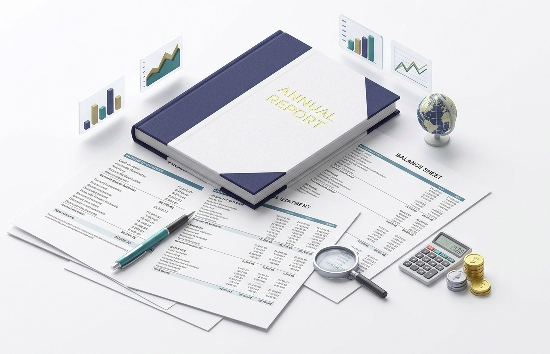
To make it clearer, there are usually four reasons beginners misunderstand reports:
- They confuse profit with cash. A company can report profit and still have cash pressure.
- They focus only on revenue. High sales do not automatically mean a healthy business.
- They ignore the balance sheet. Assets, debt, and equity tell you whether growth is supported or strained.
- They skip the notes. The notes often explain the real reason behind a number moving up or down.
Therefore, the solution is not to memorize every accounting term.
The solution is to follow a simple reading order.
| Order | What to Read | Why It Matters |
|---|---|---|
| 1 | Income statement | Shows whether the business is making money |
| 2 | Balance sheet | Shows what the company owns and owes |
| 3 | Cash flow statement | Shows whether profit is turning into real cash |
| 4 | Notes | Explains the story behind the numbers |
Keep that order in mind. It will save you from a lot of confusion.
Step 1: Start with the Income Statement
The income statement answers one simple question: did the business earn money during the period?
That sounds basic. But many investors rush through it too quickly.
What should you look at first?
- Revenue or turnover
- Operating profit
- Profit before tax
- Net profit
To make it clearer, revenue tells you how much the company sold. Operating profit tells you what is left after day-to-day business costs. Net profit tells you what remains after everything else, including taxes and finance costs.
Not all profit is the same. That is why one line is never enough.
Mini Case Study 1: Unilever in Europe
Unilever’s 2025 Annual Report gives us a clean example of how to read a real company. The report shows turnover of €50,503 million in 2025, operating profit of €9,037 million, profit before taxation from continuing operations of €8,693 million, and net profit from continuing operations of €6,213 million. The same report also shows total assets of €70,471 million, total liabilities of €52,884 million, and total equity of €17,587 million.
Now pause for a second.
What does that actually mean?
It means Unilever is not just a “big brand name.” It is a business that sold a massive amount of products, still kept a meaningful operating profit, and ended the year with a balance sheet that balances exactly: assets equal liabilities plus equity.
Here is the same information in a simpler format.
| Unilever 2025 | Amount | What It Tells You |
|---|---|---|
| Turnover | €50,503 million | Scale of sales |
| Operating profit | €9,037 million | Profit from core operations |
| Net profit from continuing operations | €6,213 million | What remains after taxes and finance items |
| Total assets | €70,471 million | What the company owns |
| Total liabilities | €52,884 million | What the company owes |
| Total equity | €17,587 million | Ownership value left for shareholders |
What should you notice first?
The gap between revenue and operating profit.
Unilever’s operating profit of €9,037 million on turnover of €50,503 million means the operating margin is roughly 17.9% when calculated from the reported figures. In plain language, about €17.90 of operating profit was generated from every €100 of turnover.
That is useful because it tells you more than “profit is positive.” It tells you how efficiently the business is turning sales into operating earnings.
And then comes the next question.
Why is net profit from continuing operations lower than operating profit?
Because the company still has finance costs, taxes, and other items below the operating line. This is exactly why investors should never stop at revenue alone.
Operating profit is one story. Net profit is another. Both matter.
Step 2: Read the Balance Sheet Like a Snapshot
If the income statement is a movie, the balance sheet is a photo.
It captures one moment in time.
And that moment matters because it shows whether the business is financially strong or quietly stretched.
On the balance sheet, you only need to remember three words first:
- Assets
- Liabilities
- Equity
Assets are what the company owns. Liabilities are what it owes. Equity is what belongs to shareholders after everything owed has been counted.
This equation is not optional. It is always true:
Assets = Liabilities + Equity
That is the foundation.
Now look again at Unilever.
In 2025, Unilever reported total assets of €70,471 million, total liabilities of €52,884 million, and total equity of €17,587 million. The balance sheet balances exactly, which is what you should expect from a properly prepared report.
What does this tell a retail investor?
First, the company is large and asset-rich. Second, it also carries a meaningful liability base. That is not automatically bad. The real question is whether those liabilities are manageable relative to earnings and cash generation.
That is why balance sheet reading is not about fear. It is about context.
Not all debt is dangerous. But debt without strong earnings can become a trap.
Why the Balance Sheet Can Change Your Mind Fast
Imagine a small retail shop.
On the surface, sales look fine. Customers still come in. The shelves are still full. Everything looks normal.
But if supplier bills keep rising faster than cash coming in, the shop may look healthy while actually being under pressure.
That is exactly why investors must ask a few simple questions:
- Are assets growing because the business is improving, or because it is accumulating things it cannot use efficiently?
- Is debt being used to expand, or to survive?
- Is equity growing steadily, or being eroded by losses?
Those questions are simple. But they are powerful.
Step 3: Do Not Ignore the Cash Flow Statement
Here is where many beginners get surprised.
A company can report profit and still struggle with cash.
How?
Because accounting profit is not the same as money sitting in the bank.
That is why the cash flow statement matters. It tells you whether the business is actually generating cash from operations, or whether the reported profit is hiding timing differences, working capital pressure, or heavy investing needs.
In Unilever’s 2025 report, cash flow from operating activities was €10,772 million and free cash flow was €5,921 million.
That matters because it shows the business generated cash after the normal costs of running and investing in the business. In simple terms, profit was not just “on paper.” It still produced usable cash.
That is the kind of detail retail investors should look for.
Mini Case Study 2: Samsung Electronics in Asia
Now let us move to Asia and look at Samsung Electronics’ 2025 audited financial statements. The company reported revenue of KRW 333,605,938 million, operating profit of KRW 43,601,051 million, profit for the year of KRW 45,206,805 million, total assets of KRW 566,942,110 million, total liabilities of KRW 130,621,773 million, and total equity of KRW 436,320,337 million. The report also states a debt ratio of 29.9% for 2025.
That is a lot of numbers.
But the story is simple.
Samsung is enormous. It generated massive revenue, stayed profitable, and ended the year with equity far larger than liabilities. That combination usually tells you the balance sheet has room to absorb shocks better than a heavily leveraged business.
Here is the simplified view.
| Samsung Electronics 2025 | Amount | What It Tells You |
|---|---|---|
| Revenue | KRW 333,605,938 million | Scale of business |
| Operating profit | KRW 43,601,051 million | Core business earnings |
| Profit for the year | KRW 45,206,805 million | Final profit after all items |
| Total assets | KRW 566,942,110 million | What the company owns |
| Total liabilities | KRW 130,621,773 million | What the company owes |
| Total equity | KRW 436,320,337 million | Shareholders’ value |
Now ask yourself a sharper question.
What is the relationship between liabilities and assets here?
Using the reported numbers, liabilities are about 23.0% of total assets. The report itself also shows a debt ratio of 29.9% for 2025. In plain language, Samsung is not carrying the kind of balance sheet burden that instantly alarms a cautious investor.
That does not mean the company is risk-free. It simply means the numbers do not suggest an overloaded balance sheet.
And that is the real purpose of reading financial statements: not to find perfection, but to understand risk.
How to Read the Three Main Statements Together
Here is where the picture becomes clear.
Do not read each statement as if they live separately.
They talk to each other.
For example:
- The income statement says the company made profit.
- The balance sheet shows whether that profit strengthened the company’s financial position.
- The cash flow statement shows whether that profit became cash.
To make it even simpler, imagine a restaurant.
The income statement tells you whether customers are paying. The balance sheet tells you whether the restaurant owns equipment and can manage its debts. The cash flow statement tells you whether money is actually in the register at the end of the day.
That is why an investor should never ask only, “Is it profitable?”
The better question is:
“Is it profitable, financially stable, and generating cash at the same time?”
What You Should Notice in a Real Report
When you open a report, do not try to understand everything at once. Start with these five checks.
- Is revenue rising or falling? That tells you whether the business is growing.
- Is operating profit healthy? That tells you whether the core business still works.
- Is net profit different from operating profit? That tells you whether finance costs, taxes, or one-off items are important.
- Are liabilities manageable? That tells you whether growth is supported or strained.
- Is equity rising over time? That tells you whether value is being built for owners.
Once you do this often enough, reports stop feeling intimidating.
They start feeling like maps.
And maps are useful only when you know where to look.
Common Mistakes Retail Investors Make When Reading Reports
Let us be honest again.
Most beginners do not fail because they are lazy. They fail because they read the wrong signal.
- They celebrate revenue growth too early. Growth without profit quality can be misleading.
- They celebrate profit without checking debt. Profit is good, but debt can still become a burden.
- They assume large companies are always safe. Large does not automatically mean strong.
- They ignore one-off items. A gain from disposal is not the same as ordinary operating strength.
- They read one year only. One year is a snapshot. Trend is the real story.
This is where the annual report becomes powerful. It lets you compare one year with the next, and see whether the business is strengthening or merely looking good for a moment. Unilever’s 2025 report and Samsung’s 2025 statements both allow exactly that kind of comparison.
A Simple Framework You Can Use Every Time
To make it practical, here is a simple framework you can use before buying any stock.
| Question | What to Check | Why It Helps |
|---|---|---|
| 1 | Is revenue growing? | Shows market demand |
| 2 | Is operating profit stable? | Shows core business quality |
| 3 | Is debt reasonable? | Shows financial risk |
| 4 | Is cash flow positive? | Shows profit quality |
| 5 | Is equity increasing? | Shows long-term value creation |
If you keep using this framework, you will stop asking “Which stock is popular?” and start asking the better question: “Which business is actually healthy?”
That shift matters a lot.
Because popular stocks can fall. Healthy businesses usually survive longer.
What the Two Examples Teach You
Unilever and Samsung are very different businesses. Different industries. Different currencies. Different markets. Different accounting details.
But the reading method is the same.
First, check the income statement. Then, check the balance sheet. Then, check the cash flow statement. Finally, read the notes.
That is the whole game.
Not magic. Not hype. Just disciplined reading.
And when you do that, you start seeing the business behind the ticker symbol.
Closing: Read the Business, Not the Noise
At the end of the day, a stock is not just a chart moving up and down.
It is a claim on a real business.
That business has assets. It has debt. It has profit. It has cash flow. It has risk.
And the financial statements are where all of that becomes visible.
So the next time you open an annual report, do not rush.
Start small.
Ask four questions:
- What did the company sell?
- What did it keep after costs?
- What does it own and owe?
- Did profit become cash?
If you can answer those four questions, you are already ahead of many retail investors.
Not because you know everything.
But because you are finally reading the business the right way.
Sources used: Unilever Annual Report and Accounts 2025 and its archive page, plus Samsung Electronics’ 2025 audited financial statements and investor relations statements page.