

Have you ever seen a stock that just keeps going up… and you wonder, “Did I miss it?”
Not just up once. Not hype. Not luck. But consistently growing, year after year.
This is exactly what Peter Lynch called a fast grower.
And here’s the interesting part… Lynch didn’t just chase growth. He looked for growth that was still underappreciated.
Because of that, fast growers are not just exciting stocks. They are potential long-term compounders — if you get them early enough.
What Is a Fast Grower… Really?
Let’s simplify it.
A fast grower is a company that can grow earnings around 20%–25% per year… and keep doing it for several years.
Sounds simple, right?
But the problem is… very few companies can actually do this consistently.
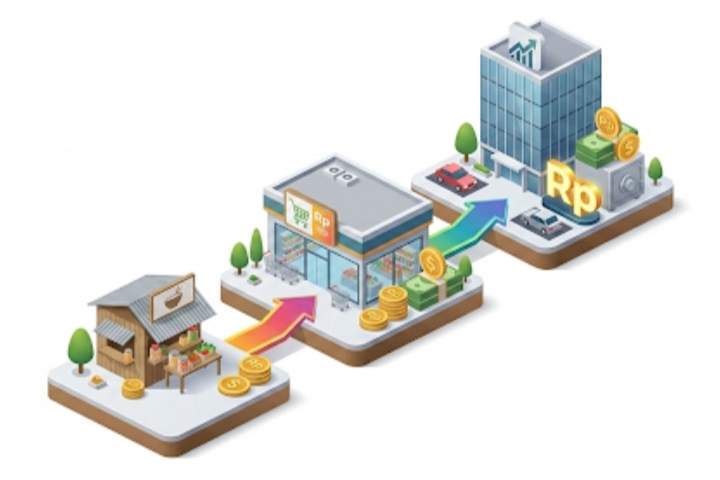
Think of it like a small business in your neighborhood.
At first, one store becomes two. Then three. Then suddenly, it’s everywhere.
That’s a fast grower.
But here’s the catch… growth alone is not enough.
Lynch often used something called the PEG ratio — comparing price to growth — to avoid overpaying (Source: investopedia.com).
Why Many Investors Get It Wrong
Most investors think they are buying fast growers.
But in reality… they are buying expensive stories.
The problem is… they focus on the headline.
“Revenue up 50%!”
“New technology!”
“Huge market!”
But they forget to ask the real questions:
Can this growth last?
Is it profitable?
Am I already too late?
Because of that… many “growth investors” end up buying at the peak, not at the beginning.
3. The 5 Biggest Mistakes in Fast Grower Investing
Let’s break it down clearly.
1. Falling in love with the story
Not all good stories make good investments.
Sometimes the numbers don’t support the hype.
2. Confusing growth with quality
Fast growth doesn’t always mean a strong business.
Some companies grow fast… because they spend too much.
3. Ignoring valuation
This is the classic mistake.
A great company can still be a bad investment… if you overpay (Source: investopedia.com).
4. Assuming growth lasts forever
It doesn’t.
Every fast grower eventually slows down.
5. Ignoring the balance sheet
Growth funded by debt or dilution can destroy value (Source: novelinvestor.com).
What You Should Look For Instead
Now let’s flip the perspective.
What does a real fast grower look like?
Not perfect… but consistent.
Here’s a simple checklist:
| Factor | What You Want | Why It Matters |
|---|---|---|
| Earnings Growth | 20%+ consistently | Shows real compounding (Source: edelweissmf.com) |
| Runway | Large market opportunity | Growth needs space |
| Valuation | Reasonable vs growth | Avoid overpaying (Source: investopedia.com) |
| Execution | Revenue + profit growth | Growth must be sustainable |
Real Examples: Modern Fast Growers
Let’s make this real.
Not theory. Not textbook. Actual companies.
1. NVIDIA
Revenue grew from $16.68B (FY2021) to $130.5B (FY2025).
That’s massive.
Even more interesting… FY2025 revenue jumped 114% YoY (Source: nvidianews.nvidia.com).
This is what real scaling looks like.
Not just growth… but accelerating growth.
2. MercadoLibre
Revenue grew from $7.07B (2021) to $28.9B (2025).
And still growing around 39% YoY (Source: annualreports.com).
What’s interesting here?
It’s not just e-commerce.
It’s also fintech.
That combination creates a flywheel effect.
More users → more transactions → more revenue → more growth.
This is exactly the kind of scalable model Lynch loved.
The Most Important Insight
Here’s the key idea…
Fast growers are not about what is growing now.
They are about what can keep growing tomorrow.
That’s a big difference.
Because the market doesn’t reward the past.
It rewards expectations.
Therefore… your job is simple, but not easy:
Find companies where the future is still underestimated.
Practical Takeaway
Before you buy a fast grower, ask yourself:
Is the growth real?
Is it sustainable?
Am I paying a fair price?
If you can answer those three questions honestly…
You are already thinking like Peter Lynch.
And that… is where better investing decisions begin.