

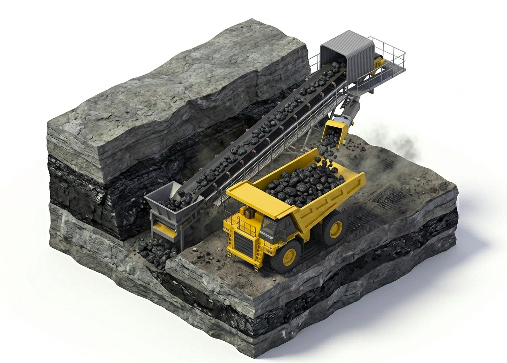
Have you ever noticed how a world that talks about clean energy can still return to the oldest fuel of all? Strange, isn’t it? In 2026, while the global conversation is still full of green transition, carbon reduction, and net-zero promises, many countries are quietly doing something very practical … they are turning back to coal.
Japan is one of the clearest examples. A country well known for discipline, technology, and environmental awareness has decided to allow less efficient coal-fired power plants to join electricity capacity supply auctions again. These plants were previously kept in reserve or effectively sidelined because of emissions reduction goals. But now, the logic is changing. The problem is not ideology anymore. The problem is supply, stability, and price.
And Japan is not alone. Across Asia, countries such as South Korea, Thailand, India, and the Philippines are taking similar steps. Some are restarting coal units that had been retired. Others are increasing the output of existing coal-fired plants. Why? Because energy security is suddenly more urgent than energy purity. Therefore, the coal story is back on the table — not as a long-term dream, but as a short-term shield.
For retail investors, this is not just a political or environmental story. It is also an investment story. In fact, this may be one of the best examples of how macro events can change sector leadership. When the world becomes uneasy, the market changes its favorite names. As a result, coal, LNG, renewable energy, utilities, and battery-related stocks can all move in very different directions depending on how the crisis unfolds.
So what is really happening here? And why should you care?
Why Asia Is Turning Back to Coal
To make it clearer, let us start with the root cause. The immediate trigger is geopolitical tension in the Middle East. When conflict disrupts oil and gas supply routes, energy markets react fast. Add to that uncertainty around LNG supply from Qatar — one of the major names in global gas trade — and the pressure becomes even more intense.
Asia is especially vulnerable. Many Asian countries depend heavily on imported energy. They do not control the wells, the shipping lanes, or the international pricing environment. That means when global energy supply becomes tight, they feel the pain very quickly. Prices rise. Supply tightens. Power costs become unstable. Industrial planning becomes harder. And in that kind of environment, governments tend to choose the most available backup option.
Not the cleanest option. Not the most elegant option. But rather the fastest one.
That backup option is coal.
Coal may be unpopular in climate discussions, but from a practical power-system perspective, it still has one major advantage: it is already there. The plants exist. The fuel supply chain is known. The technology is mature. The operators understand it. The grid knows how to handle it. In moments of stress, that familiarity matters a lot. In the same way a family may keep an old generator in the garage “just in case,” governments also lean on the assets they already have when energy pressure becomes serious.
The Paradox: Climate Goals Versus Energy Security
This is where the tension becomes obvious. On the one hand, Japan and other Asian economies are trying to reduce emissions, expand renewables, and show commitment to climate targets. Japan, for example, has set ambitious emissions reduction goals for the coming decade. On the other hand, once energy stress becomes severe, those long-term goals can suddenly face a very short-term reality check.
And that is the paradox. The cleaner future depends on stable energy today. But when stable clean energy is not yet fully available, countries often fall back on the most reliable old tools they have. Coal is one of them.
Think about it like this: if your house loses power in the middle of the night, do you care first about elegance or electricity? Most people care about light. Only later do they think about the long-term cost of the backup solution they used. Governments behave in a similar way when the power system is under pressure.
This does not mean the green transition is dead. Not at all. It means the transition is messy. It is not a straight road. It is a negotiation between ideals and reality … between emissions targets and blackouts … between long-term plans and urgent needs.
1. Energy shortages force governments to choose the fastest tool
The first major cause is simple. When energy supply is threatened, governments do not wait for perfect solutions. They use what they already have. If LNG imports become expensive or uncertain, coal can act as an immediate substitute. That is especially true in countries where electricity demand is growing and grid stability is essential for factories, households, and public services.
This is important because energy policy is often judged in theory, but executed in crisis. In theory, every country wants cleaner power. In crisis, every country wants stable power. The market always learns this the hard way.
2. Imported LNG looks good … until supply becomes fragile
For years, LNG has been sold as a bridge fuel. A cleaner alternative to coal. A transition tool. A stepping stone toward renewables. That narrative is not necessarily wrong. But it becomes weaker when the fuel itself is imported from politically sensitive routes or uncertain suppliers.
What is the point of a “bridge” if the bridge can be shaken by geopolitical shocks? What is the point of depending on imported gas if the price can jump suddenly and the supply can tighten just when your economy needs it most?
That is why countries like Vietnam, which have invested more heavily in domestic solar energy, may have stronger protection than countries relying more on imported fuels. An analyst from Zero Carbon Analytics, Amy Kong, has pointed out that countries with stronger domestic renewable capacity can be better shielded from import-price crises. The logic is straightforward: local energy is less exposed to foreign supply disruptions. Therefore, the more a country relies on energy from home, the less vulnerable it is to global shocks.
3. Coal is dirty, but it is also predictable
This is where many investors and policymakers struggle emotionally. Coal is not a clean story. It is not the future we all want to imagine. But it is a predictable one. The fuel is known. The storage is known. The dispatch is known. In a market crisis, predictability often beats perfection.
That does not make coal a good long-term environmental answer. It simply makes coal an effective short-term response. And that distinction matters.
Because of that, the current coal rebound should not be interpreted as a permanent reversal of the energy transition. It is more like an emergency brake. The car is still moving toward a cleaner future, but when the road suddenly turns dangerous, the driver grabs the brake before thinking about the scenic route.
What This Means for the Stock Market
Now we come to the part retail investors care about most: what happens to stocks?
Energy shocks do not stay inside government meeting rooms. They move into earnings forecasts, commodity prices, capex plans, and sector valuations. As a result, different parts of the stock market react differently. Some sectors benefit immediately. Others benefit later. Some get hurt.
Let us break it down systematically.
1. Coal stocks: the short-term winner
When demand for coal rises, coal prices can strengthen. If Japan and other Asian countries increase coal-fired generation, that can become a positive catalyst for coal producers. The logic is direct. More demand can support pricing. Higher pricing can support revenue and margins. And the market often responds before the full effect appears in quarterly earnings.
That is why coal stocks often become the “emergency trade” during supply shocks. Not because investors suddenly fall in love with coal. But because the market is pricing near-term cash flow strength.
For retail investors, the key question is this: is the move just a temporary spike, or does it signal a longer period of strong demand? The answer matters. A short-lived rally can fade quickly. A multi-quarter demand shift can re-rate an entire sector.
2. Renewable energy stocks: the hidden medium-term beneficiary
Here is the interesting twist. A coal comeback can actually help renewable energy stocks over the medium term. Why? Because crises change policy thinking. When governments realize that imported fuel is fragile, they often become more serious about domestic power generation.
Solar. Wind. Geothermal. Battery storage. These are not just climate buzzwords. They are strategic assets. They reduce dependence on external supply chains. They make power systems more resilient. Therefore, when the cost of energy insecurity becomes visible, investment in renewables often becomes more politically attractive.
Think of it like this: coal may solve today’s problem, but it also reminds everyone why tomorrow’s infrastructure matters. That is why renewable stocks can benefit even when coal itself is enjoying a short-term rally. The crisis exposes the weakness of import dependence, and that can encourage stronger long-term capex into clean domestic power assets.
In practical terms, this may support companies involved in solar panel production, green independent power producers, battery storage, grid modernization, and related infrastructure. The benefit may not happen overnight. But markets often start to price the narrative before the spending appears in results.
3. LNG stocks and infrastructure: the narrative becomes less comfortable
For LNG-related stocks, the story is more complicated. Gas still plays a role in the energy mix. But the idea that LNG is automatically the safest “transition fuel” becomes harder to defend when geopolitical uncertainty interrupts supply. Countries may hesitate to build new gas infrastructure if they fear long-term dependence on a fragile import chain.
This can affect terminal developers, infrastructure operators, shipping-linked businesses, and gas-focused utilities. If the market begins to believe that LNG is less secure than once thought, valuation multiples can come under pressure. Not because gas disappears. But because investors start asking harder questions about durability and replacement risk.
That is the hidden market consequence of a geopolitical energy shock. It changes not only prices, but also confidence.
4. Utilities and industrials: volatility becomes the new normal
Utilities may face margin pressure if fuel input costs rise faster than they can pass them on. Industrial firms can be hit by higher electricity bills. Manufacturing, chemicals, steel, and other power-sensitive sectors may see cost inflation. As a result, investors need to watch not only the fuel producers, but also the fuel consumers.
A stock market crisis is never one-directional. One company’s gain is another company’s burden. That is why sector rotation matters so much in an energy shock.
Table: Who Benefits, Who Feels the Pressure?
| Sector | Likely Impact | Why It Happens |
|---|---|---|
| Coal producers | Short-term positive | Rising demand and stronger pricing |
| Renewable energy | Medium-term positive | Greater push for domestic power security |
| LNG infrastructure | Mixed to negative | Higher doubts about long-term dependence |
| Utilities | Mixed | Fuel costs and tariff pass-through risk |
| Industrial consumers | Negative | Higher energy input costs reduce margins |
A Real Investor Lesson Hidden Inside This Energy Story
This is where the story becomes bigger than coal itself. The real lesson is about how markets price uncertainty. Investors often assume that a trend will continue smoothly. Green energy will rise forever. LNG will be the perfect bridge. Coal will keep shrinking. But the world rarely moves in a straight line.
Instead, the market moves in waves. One shock pushes policy in one direction. Another shock pushes it back. A third shock changes the investment narrative again. Therefore, retail investors need to think less like spectators and more like observers of system behavior.
Here is a simple analogy. Imagine a three-legged stool: one leg is affordability, one leg is reliability, and one leg is sustainability. If one leg breaks, the stool becomes unstable. Energy policy is exactly like that. If a country focuses only on sustainability but ignores reliability, the system can wobble. If it focuses only on reliability and ignores sustainability, the system becomes expensive and dirty. The best strategy is balance … but balance is hard when crisis hits.
Why This Crisis Is Not Useless
Some people see coal’s return and conclude that the energy transition has failed. That is too simplistic. In fact, this crisis may force honesty into the energy debate. It reminds policymakers that transition fuels are not truly secure if they remain highly imported. It reminds investors that domestic resilience matters. And it reminds corporations that power supply risk is not a theoretical issue. It is an earnings issue.
That is why I would not call this a dead-end. I would call it a stress test.
When the stress test happens, the strongest strategies become visible. Countries with more domestic renewable generation may hold up better. Companies with stronger balance sheets may navigate volatility better. Investors who understand macro rotation may spot the next leadership group earlier than the crowd.
What Retail Investors Should Watch Next
If you are following this theme as an investor, there are several signals worth watching.
First, monitor policy announcements from Japan and other Asian governments. If coal utilization keeps rising, that can support the near-term earnings case for coal-linked companies. Second, watch LNG prices and shipping conditions. If supply tension persists, the pressure on gas-related infrastructure may continue. Third, track capex plans for solar, wind, storage, and grid upgrades. If governments shift toward domestic energy independence, renewable stocks may benefit later. Fourth, pay attention to utility tariffs and industrial electricity costs. Rising input costs often show up in margins before they show up in headlines.
Most importantly, do not think in only one timeframe. A stock can be a short-term winner and a long-term loser. Another can be weak today but strong two years from now. Therefore, every energy trade needs a time horizon.
A Practical Way to Think About the Opportunity
If Anda are a retail investor, the smartest approach is not to rush into one side of the trade blindly. Instead, ask four simple questions:
- Is this a short-term supply shock or the start of a longer policy shift?
- Which companies directly benefit from higher coal use?
- Which companies may benefit later from the push toward domestic renewables?
- Which businesses become more vulnerable if LNG remains unstable?
Those questions can save you from emotional investing. And emotional investing is expensive. The market rewards patience, but it punishes confusion.
Final Thought: Follow the Energy, Not the Noise
The return of coal in Asia is not a glamorous story. It is not the kind of narrative investors usually want to cheer for. But it is real. And real-world investing requires us to look at what is happening, not what we wish were happening.
Coal is rising again because energy security matters. LNG is under pressure because geopolitics is messy. Renewables may gain more support because countries want domestic resilience. As a result, the market may move in ways that surprise anyone who only follows headlines.
So, what should you take away from this?
Not that coal is the future. Not that clean energy is over. But rather that the transition path is uneven, and the winners in one phase may not be the winners in the next. That is why disciplined investors study the chain reaction. They do not just ask what happened today. They ask what this means for earnings, policy, and capital allocation over the next few years.
That is where opportunity lives.
Because in the end, the best investors are not the loudest ones. They are the ones who understand why the world changes, and where the money may move next.