
For decades, modern medicine worked almost like a factory…
You get sick. You visit a doctor. You receive the same medicine prescribed to millions of other people.
Simple.
But here is the uncomfortable truth…
Humans are not identical machines.
Two people can have the same disease but react very differently to treatment. One patient recovers quickly. Another experiences severe side effects. Someone else gets no benefit at all.
The problem is… traditional healthcare was designed around averages.
Average blood pressure.
Average body weight.
Average drug response.
Average patient.
But in reality, there is no “average human.”
And because of that, healthcare is entering one of the biggest transformations in modern history:
Personalized Medicine.
Not medicine for everyone…
But medicine designed specifically for you.
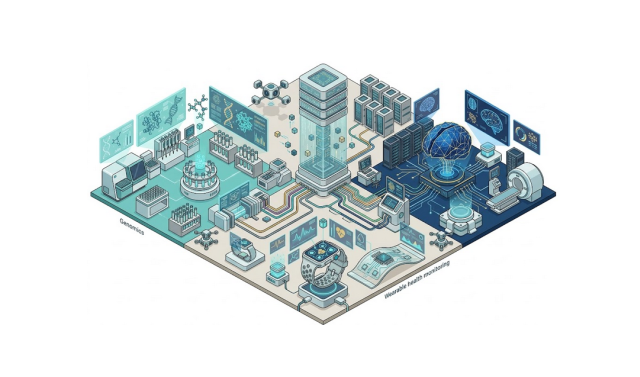
This shift is powered by three massive technologies:
- Genomics
- AI diagnosis
- Wearable health monitoring
And the implications are enormous.
Imagine diseases detected before symptoms even appear.
Imagine cancer treatments designed for your exact genetic mutation.
Imagine your smartwatch warning you about heart problems days before hospitalization.
Science fiction?
Not anymore.
For retail investors, this matters because healthcare may become one of the largest long-term investment themes of the next 10–20 years.
Not only biotech companies…
But also AI infrastructure, semiconductor companies, health data platforms, cloud computing providers, and wearable device ecosystems.
In other words…
The healthcare revolution is no longer only about hospitals.
It is becoming a data industry.
Source : McKinsey — The Future of Biopharma Personalized Medicine
Source : World Economic Forum — Personalized Healthcare, AI and Genomics
Why Traditional Healthcare Is Becoming Less Effective
Let us use a simple analogy.
Imagine a shoe company that only sells one shoe size for everyone.
Would it work?
Of course not.
Some people would feel pain. Others would not fit at all. Many would walk inefficiently.
That is essentially how old healthcare systems operated.
Doctors relied heavily on generalized clinical data. Treatments were optimized for the majority population, not necessarily for specific individuals.
As a result…
Drug failures became expensive.
Late-stage disease detection remained common.
Healthcare costs exploded globally.
According to estimates from the World Health Organization, chronic diseases such as diabetes, cardiovascular disease, and cancer account for the majority of global deaths each year.
Most importantly, many of these diseases develop silently over long periods.
By the time symptoms appear…
The damage may already be severe.
This is exactly why predictive healthcare is becoming so valuable.
Source : WHO — Noncommunicable Diseases Fact Sheet
Source : NIH — Personalized Medicine
The Three Pillars of Personalized Medicine
1. Genomics — Reading the Human Blueprint
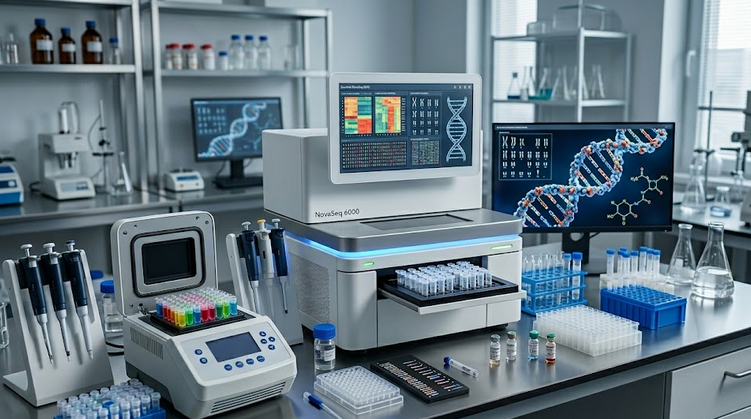
Everything starts with DNA.
Your genes influence how your body reacts to medicine, processes nutrients, fights disease, and ages over time.
Twenty years ago, sequencing a human genome cost nearly USD 100 million.
Today?
Some companies can do it for under USD 1,000.
That cost collapse changes everything.
Because once genetic sequencing becomes cheap enough, healthcare shifts from reactive to predictive.
Doctors may identify genetic risk for cancer long before tumors form.
Drug compatibility can be tested digitally before prescriptions are given.
Rare diseases can be diagnosed faster.
Not guesswork…
But biological precision.
One important example is cancer treatment.
Traditional chemotherapy attacks both healthy and unhealthy cells. Personalized oncology instead focuses on specific mutations inside tumors.
Therefore, treatment can become more targeted and potentially less damaging.
Companies heavily involved in this area include:
- Illumina (United States) — gene sequencing leader
- Roche (Switzerland) — precision diagnostics and oncology
- Oxford Nanopore Technologies (United Kingdom) — portable DNA sequencing
- BGI Genomics (China) — one of Asia’s largest genomics companies
- Sophia Genetics (Switzerland) — AI-powered genomic analysis platform
Source : Genome.gov — The Cost of Sequencing a Human Genome
Source : Illumina — Next Generation Sequencing Technology
2. AI Diagnosis — Machines That Detect Disease Earlier
Now comes the next layer…
Artificial Intelligence.
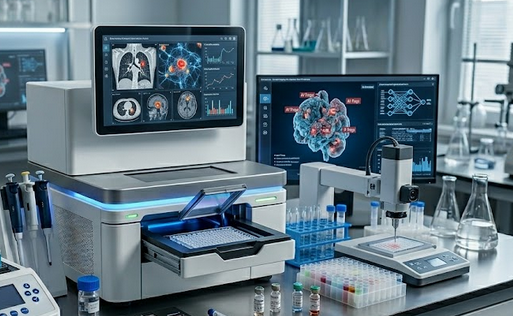
Healthcare generates enormous amounts of data every day:
- Medical imaging
- Blood tests
- DNA data
- Heart monitoring
- Hospital records
- Wearable sensor data
The challenge is not collecting information anymore.
The challenge is interpreting it fast enough.
This is where AI becomes incredibly powerful.
AI systems can analyze millions of medical patterns far faster than humans. In some medical imaging tasks, AI models already perform comparably to experienced radiologists.
For example:
- AI can detect diabetic eye disease from retinal scans
- AI can identify early-stage cancer markers in imaging
- AI can monitor irregular heart rhythms continuously
- AI can predict patient deterioration in hospitals
Most importantly…
AI does not get tired after analyzing 1,000 scans.
That scalability matters enormously because many countries face doctor shortages and aging populations.
Asia especially may benefit significantly because healthcare demand is rising rapidly alongside middle-class growth.
Interesting companies in this space include:
- Tempus AI (United States) — precision medicine and data analytics
- Fujifilm Holdings (Japan) — AI-assisted medical imaging
- Alibaba Health (China) — digital healthcare ecosystem
- Siemens Healthineers (Germany) — AI diagnostics and imaging
- Philips (Netherlands) — connected healthcare systems
Source : Nature Medicine — Artificial Intelligence in Healthcare
Source : Siemens Healthineers — Artificial Intelligence in Healthcare
3. Wearables — Turning Daily Life Into Health Data
Perhaps the most visible healthcare revolution is already on your wrist.
Smartwatches.
At first, wearable devices looked like fitness gadgets.
Count your steps.
Track your calories.
Monitor your sleep.
Simple consumer products.
But now?
Wearables are slowly evolving into medical monitoring systems.
Modern devices can track:
- Heart rhythm
- Blood oxygen
- Stress indicators
- Sleep quality
- Body temperature
- Physical recovery
Some research projects are even exploring non-invasive glucose monitoring.
Think about the implications.
Instead of checking your health once a year during hospital visits…
Your body could be monitored continuously.
That changes healthcare from episodic care into continuous prevention.
And because of that, health data itself becomes an incredibly valuable asset.
Companies involved include:
- Apple (United States) — Apple Watch health ecosystem
- Samsung Electronics (South Korea) — Galaxy wearable ecosystem
- Withings (France) — connected health devices
- Huawei (China) — health-focused smart wearables
- Oura Health (Finland) — smart health ring analytics
Source : Apple — Apple Watch Healthcare
Source : Oura — Science and Research
The Economics Behind Personalized Medicine
Now let us look at the business side.
Why are investors paying attention?
Because healthcare is one of the world’s largest industries.
Global healthcare spending exceeds USD 10 trillion annually according to multiple estimates.
Even small efficiency improvements create enormous economic value.
For example:
- Earlier diagnosis reduces hospitalization costs
- Targeted treatments reduce wasted drug spending
- Preventive monitoring lowers emergency care frequency
- AI automation improves medical productivity
Not only healthier patients…
But potentially lower system-wide healthcare costs.
That is why governments, insurers, pharmaceutical companies, and technology giants are all investing aggressively.
Source : CMS — National Health Expenditure Data
Source : Deloitte — Life Sciences and Healthcare Industry Insights
| Healthcare Segment | Main Opportunity | Key Driver | Example Companies |
|---|---|---|---|
| Genomics | DNA sequencing & precision therapy | Falling sequencing cost | Illumina, BGI Genomics |
| Medical AI | Faster diagnosis & automation | Healthcare data explosion | Siemens Healthineers, Tempus AI |
| Wearables | Continuous health monitoring | Consumer adoption | Apple, Samsung, Oura |
| Health Data Platforms | Integrated patient analytics | Cloud computing & AI | Sophia Genetics, Philips |
Global Personalized Medicine Market
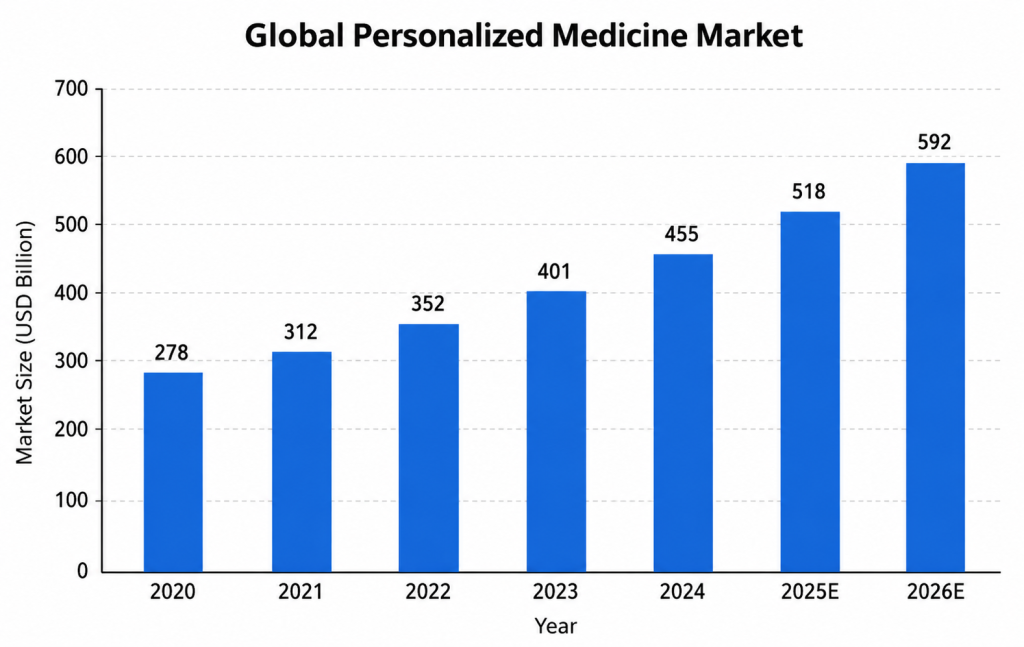
Source : Grand View Research — Personalized Medicine Market Size Report
The Risks Investors Should Not Ignore
Of course, not every healthcare company will succeed.
This industry also carries significant risks.
- Regulatory approval delays
- Clinical trial failures
- Privacy concerns around health data
- Extremely high R&D costs
- Long commercialization timelines
A biotech breakthrough may sound revolutionary…
But if it fails Phase 3 clinical trials, stock prices can collapse overnight.
That is why investing in healthcare requires patience and diversification.
Not hype investing.
But understanding business models, technology advantages, data ownership, and long-term adoption trends.
What This Means for Retail Investors
Now comes the important question…
How should ordinary investors think about this trend?
The first thing to understand is this:
The healthcare revolution is not one single company story.
It is an ecosystem transformation.
Think of smartphones.
When smartphones exploded globally, not only phone manufacturers benefited.
Semiconductor companies won.
Cloud providers won.
App developers won.
Mobile networks won.
The same pattern may happen in healthcare.
Therefore, investors can think in layers:
- Biotech innovators
- AI infrastructure companies
- Medical device makers
- Cloud computing providers
- Data analytics platforms
- Semiconductor suppliers for healthcare AI
Most importantly…
Focus on long-term structural trends instead of short-term hype cycles.
Final Thoughts — Healthcare May Shift From Treatment to Prediction
For most of human history, medicine has been reactive.
You become sick first.
Then treatment begins.
But personalized medicine changes the equation entirely.
What if disease risk can be identified early?
What if treatment is optimized specifically for your biology?
What if AI continuously monitors invisible health patterns?
Healthcare may gradually shift from treatment…
To prediction and prevention.
And if that happens, the economic impact could be massive.
Not only for hospitals and pharmaceutical companies…
But for the entire digital economy surrounding health data.
This is important because many investors still view healthcare as a slow-moving sector.
On the contrary…
Healthcare may become one of the most technology-driven industries of the next decade.
And those shifts usually create both disruption and opportunity.
The question is no longer whether personalized medicine will grow.
The real question is:
Which companies will own the data, the platforms, and the intelligence behind future healthcare?